Semi Truck Fifth Wheel Standards: Manufacturing & Testing Protocols Explained
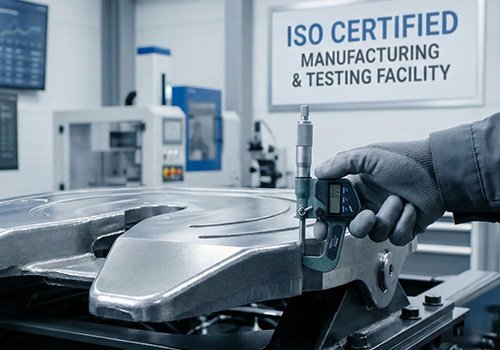
Meta Description: Discover the critical manufacturing standards and testing protocols for semi truck fifth wheels. Learn how rigorous ISO fatigue tests and static load checks ensure heavy-duty fleet safety
Semi Truck Fifth Wheel Standards: Manufacturing & Testing Protocols Explained
The semi truck fifth wheel is more than just a connecting part; it is the critical link that secures the entire payload. For fleet managers and parts distributors, understanding the manufacturing standards and testing protocols behind these components is essential for ensuring road safety and operational efficiency.
High-Standard Material Selection
The foundation of a reliable fifth wheel lies in its metallurgy. Premium manufacturers typically utilize high-strength cast steel for the top plate. This material is chosen for its superior ability to withstand shock loads and harsh environmental conditions compared to standard fabricated steel. The casting process must adhere to strict tolerances to ensure a perfectly flat surface, minimizing friction plates wear.
Critical Testing Protocols: ISO and SAE
To comply with global safety regulations, a semi truck fifth wheel must undergo rigorous testing before mass production. Two primary tests define the industry standard:
Dynamic Fatigue Test: This simulates millions of coupling cycles. The fifth wheel is subjected to oscillating forces to test the endurance of the locking mechanism and the jaw. Standards like ISO 1726 dictate that the unit must survive extreme stress cycles without developing structural cracks.
Static Load Test: This measures the vertical load capacity. It ensures the fifth wheel can support the heavy downward pressure of a fully loaded trailer (e.g., 50,000 lbs or more) without deformation.
Why Compliance Matters
Choosing a fifth wheel that meets or exceeds these testing protocols is not just about compliance—it is about cost-saving. Certified components reduce the risk of accidental uncoupling ("dropped trailers"), lower maintenance frequency on the locking jaws, and extend the lifespan of the entire coupling system.